Click on this and then Proceed.
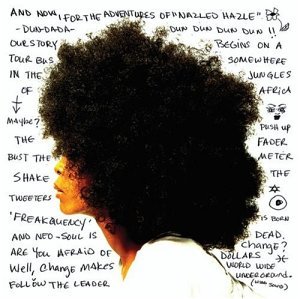
 The "Queen of Neo-Soul," Erykah Badu incorporates R&B, rap, soul, jazz and funk into her music. She has worked with artists as diverse as The Flaming Lips, The Roots and Sergio Mendez, virtually creating a unique genre of music that is more than a way of making a living, but a passionate cultural protest. Erykah Badu's incorporation of funk in many of her songs, most significantly in her song "Funk you Up (Love of My Life Remix)" ft. Queen Latifah and Angie Stone, adds to her image of embracing individuality. Historically funk referred to body odor, but with the 60's Civil Rights movement it came to represent an acceptance and pride of blackness. In The Bluest Eye, Morrison uses the binary aspect of racism to contrast the Geraldines of the world, who are committed to changing themselves to fit white beauty standards and be secure, with the funky individuals, perhaps the Claudias who must learn to embrae their 'defects.' Geraldine has learned "how to get rid of the funkiness. The dreadful funkiness of passion, the funkiness of nature, the funkiness of the wide range of human emotions" (83). It is this funk, the blackness and individuality, that Erykah Badu so admires in her music, even implicitly citing the original propagators of funk, Parliament Funkadelic, in this song. Singing
Yeah, funk you up, we gon' funk you upErykah Badu seems to call on P. Funk's line, "I want my funk uncut,... I wants to get funked up," emphasizing the impact the 'funk' had on history and racial identity.
If you not ready, you better get yourself together
We gon' funk you up, we gon' funk you up

This is how I look without makeup...
I got a little pot in my belly
So now a days my figure ain't so fly
My dress ain't cost nothin' but seven dollars
But I made it fly
And I'll tell ya why
But I'm clever when I bust a rhyme
Badu reinforces her idea of natural beauty - her body in all its biological glory. She even reinforces her pride in her talent for music, a talent that has come from years of hard work and love for music rather than a genetic gift.
Yet Erykah Badu goes farther than breaking the hair stereotype. The singer garnered attention and critique for her video "Window Seat," which portrays her walking along a crowded street in Dallas, stripping down to the nude until she is shot down. The powerful images, a two minute, one-take shot that earned her a fine and sixth months of probation, showcase how society punishes people for taking off their superficiality. The video cites indie duo Matt & Kim's video Lessons Learned, which also plays with physical beauty, one of the "most destructive ideas in the history of human thought" (122). By embracing herself in her most natural state, ignoring the idea of biological defects, Erykah Badu is even liberated on a sexual level. Geraldine, and by association the rest of the secure black girls playing white, sees sex as an obligation and restrains herself from enjoying it. Uncomfortable with nudity, Geraldine chooses to lift "the hem of her nightgown only to her navel," contrasting the freeing nudity Erykah Badu demonstrated in a crowded street. While the artist is not making her sexuality a point in the video, obviously not using her body to sell music, she is transcending the image of a woman as not just a sexual object but a confident individual. Erykah Badu ultimately has turned her 'defects', which biologically give her a unique appearance but environmentally have become another justification for social constructs of beauty and racism, into a protest.
Embracing individuality is a brave act, and has earned Erykah Badu plenty of criticism. In response to critiques of her hair, style, music and videos she writes:
"They who play it safe, are quick to assassinate what they don't understand. They move in packs, ingesting more and more fear with every act of hate on one another. They feel more comfortable in groups, less guilt to swallow. They are us. This is what we have become, afraid to respect the individual."The "they" she refers to brings to mind the "they" Morrison uses in describing Geraldine. The power of the group leaves Geraldine with a (stereo)type she is content to fill, but with no voice. Assimilation gives security, but also immobility: "Their roots are deep, their stalks are firm, and only the top blossom nods in the wind" (82). This quote attacks the ease of assimilation, feeling "more comfortable" with the power in numbers. Erykah Badu's funky music, her dedication to natural beauty, and her desire for change help define her as an artist with a social conscience. She exemplifies the kind of change Toni Morrison expects from the black individual, paving the way for a new stereotype: the individual.