Monday, October 15, 2012

From Music to Poetry


From Music to Poetry


Somali rapper Keinan Abdi Warsame, more commonly known by his rap name K’naan, has risen in recent years as one of the most renowned music performers of our time. However, his style on stage can differ greatly from traditional, customary approaches to Rap. From personal experience having the chance to attend a K'naan concert, I have observed his unique style of performance.
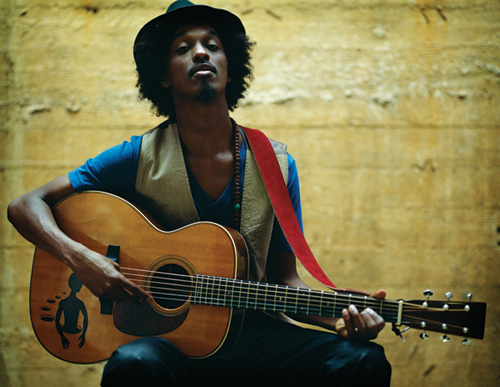


Unlike any other rapper I have seen in concert, K’naan punctuates each song or tune with one or two pieces of poetry he has written. Similar approaches of presentation have been attempted in various contexts. For instance, Toni Morrison divides the sections of her novel The Bluest Eye with short excerpts from the children’s book Fun With Dick and Jane that become almost poetic under Morrison's pen, providing an ironically simplistic vignette for the following section of the story. Morrison uses this technique to provide a different way of perceiving the themes of her written work and briefly deflects the reader's attention from the issues discussed in the novel to borrowed variations of the same themes. K’naan and Morrison both use this method of taking some outside source of literature to strengthen the points relating to racial discrimination and social injustice made in their main work. In fact, others have also seen this connection between Morrison’s work and poetry as one critic expresses on the back cover of the novel, “so precise, so faithful to speech and so charged with pain and wonder that the novel becomes poetry” (The New York Times). Interestingly, K'naan's various songs and poetic works include a children’s book that was recently released this September, written by K’naan himself and called When I Get Older: The Story Behind “Wavin’ Flag”, telling the story of his family’s move to New York to escape the daily threat of murder and kidnapping consuming Somalia during the 1990’s.  


Because he is an immigrant from Somalia to the U.S. and a victim of the severity of the Somali Civil War, K’naan’s music is tightly linked to the concerns presented in areas where oppression and high levels of prejudice are intensely problematic. The song “America” is ironically sung mostly in the Somali language, accentuating an atmosphere of ambiguity between his old and new worlds.


There are certain things fresh and certain things mesh
I got my own sound, I don't sound like the rest
And even my attire and my choice of dress
And not long ago I don't spoke English
My point is police pull me over a lot
They wonder what kind of rap sheet I got
And sometimes I take a young girl out to eat
And hold the door open, oh you're so sweet
Of course my affection's super illustrated
And I like to give, don't reciprocate it
Unless you could give me someone innovated
Well let's cook it up, we don't refrigerate it
But back to the country of the educated
Where people get robbed and they celebrate it


              Throughout the song, K’naan flashes his pride in his uniqueness about nearly everything he does: his “choice of dress,” and how he “don’t sound like the rest.” A difficultly for many immigrants coming to the U.S. from non-industrialized countries is a sense that their culture is insignificant or disregarded in the new world. In response, many of these immigrants have given-in to American culture and even attempt to hide indications of foreignness. K’naan presents through his music that the cultural differences between his country and that of America do not have to clash. Instead, they can coexist without imposing upon each other. K’naan’s music pressures and challenges immigrants like these to wear their abnormalities on the outside instead of hiding them on the inside, an idea (of passing as a member of American culture) that has become a staple throughout many immigrant populations.
Aside from the specific topics that K'naan raps about, simply the contrast of languages throughout the song between Mos Def, Chali 2na, and K’naan creates a structure to the song that exemplifies the ideas of coexistent cultures in a single world. While many hide from their cultures, K'naan aligns American culture and his own Somali culture to compare the flaws in each: "back to the country of the educated where people get robbed and they celebrate it." Here, it is noted that Somalia does not allow for most citizens to receive any education due to a lack of organized governmental control while America provides opportunity for all to obtain some degree of education publicly. Yet the next line points out America's tendency to celebrate parts of U.S. history that damaged other cultures and societies in pursuit of American ideals. Many people in America celebrate the settling of the pilgrims in colonial times while others may see it as more of an invasion of land and property, leaving many people native to the areas homeless. In addition to this reference to a conflict hundreds of years ago, K'naan, in the same line, also notes the high crime rate present in the U.S. raising questions of similarities to the excess in violence occurring in Somalia during its civil war.

magaeygu waa sharaf [she says: My name is Sharaf]
sharaf haaji weeyan [Sharaf Haaji, it is]
aqalada hariirta [Those beautiful houses]
dhina baan ka jooga [I live beside]
alla ya u sheega [Somebody please tell them]
tinta u shanleeya [give them a clue]


            This verse takes the song in a slightly new direction speaking from the perspective of a young Somali girl who seems to be observing aspects of the world that many would consider unpleasant to discuss. She observes the "beautiful houses," not as an inspiration for her own life and livelihood, but to "live beside," again comparing the cultures of one wealthy nation to less privileged nations such as Somalia.  She asks for somebody to expose the wealthy to the hardships endured by people living in underdeveloped countries, revealing the wealthy's reluctance to spare their resources for those in need. "Those beautiful houses" referred to in the verse also draws attention to ideas of the "American Dream." Often presented with imagery of white picket fences and neatly kept lawns, the dream collects ideals from white supremacist views early in U.S. history that has resulted in many Americans low in social class unable to move past a certain point in the societal hierarchy. 


             Like K'naan, many other performers have attempted to send a message promoting cultural pride. Many characters and famous people, such as Langston Hughes and Claude McKay, during the Harlem Renaissance were extremely involved in the awareness of white supremacist oppression through literary or art works. This sort of rebellion against discrimination followed throughout the 20th century. Other music performers prior to K'naan made many attempts to reach out to immigrant populations in the U.S., bringing their cultures closer together. James Brown's "I'm Black and I'm Proud" is a song that especially focuses on African-American pride and feelings of ownership of their ethnicity. 


            Morrison addresses the issue in an ironic way by exploring the idea of social self-denial through characters such as Pecola, Geraldine, and Junior in The Bluest Eye. Pecola’s obsession for blue eyes through the end of the novel comes from figures, such as Shirley Temple, advertised as socially acceptable or beautiful. Her desire to become beautiful like the white people presented in Shirley’s films consumes her to the point that she convinces herself that her eye color has changed in a way that is suitable to the culture of socially high-class individuals. Geraldine's desire for social beauty carries her to a level of unfortunate acceptance in which she, instead of trying to make herself more white, tries to make herself less black. 
Between black people, "niggers," and white people, Geraldine inserts a new social class, which she teaches to her son, Junior-- that class is referred to as "colored" rather than black (87). The difference she presents to him is that colored people are "neat and quiet" (perhaps also her perception of white people) while niggers are "dirty and loud" (87). To act white is not to be white, but to Geraldine, embracing white culture is the only way to not be a nigger (the lowest social class on the racial hierarchy). Junior also struggles with the conflict between white culture and black culture, not only at home with Geraldine but at "his" playground as well. Junior's hesitance to play with the other black children forces him to realize the differences between the two cultures. From what he can see, black children indeed do get dirty and play loudly while white children seem to not. An inner conflict arises when he questions the authority of white culture and begins to desire playing with the other black children. 
             While K'naan had poetry in mind when performing on stage, Morrison had music in mind when writing The Bluest Eye


The pieces of Cholly's life could become coherent only in the head of a musician. Only those who talk their talk through the gold of curved metal, or in the touch of black-and-white rectangles and taut skins and strings echoing from wooden corridors, could give true form to his life... Only a musician would sense, know, even knowing that he knew, that Cholly was free. Dangerously free. Free to feel whatever he felt. (159)


Toni Morrison, here, uses a concept similar to one written by W.E.B. Dubois where the idea of music becomes a sort of code that only certain people can crack. These people are in touch with a kind of musicality performed by "only those who talk their talk." This inner circle being described simply refers to the black community where only African-Americans could understand certain aspects of a black person's mannerisms or thoughts. Music has an emotional tie, specific to a certain group of people who listen to that kind of music. In contrast, plain language has a feeling of practicality, giving it the malleability of universally being understood among any number of people. 
During the times of slavery in the U.S., plantation slaves were known for singing in unison with their work to help pass the time and also send coded messages to one another so that the master would not hear or understand. Cholly's case, however is slightly different. To describe Cholly as simply decoding a message would be incorrect. Morrison goes one step further to describe Cholly by expressing that, though other black people see through the coded messages of the music, he can only be seen by the people who see the music. This level of invisibility gives him the "freedom" that no other character in the story ever experiences: the freedom of being hidden.


              Artists across all genres, whether in music or literature, have distinguished issues of immigrant cultures when contrasted with American culture and often identify a problem in miscommunications between the two. K'naan's wish through the music he writes is a world where someone foreign to a country does not feel a need to pass as a native member of that society, yet can exhibit their own cultures without criticisms from peer communities. In addition, Toni Morrison uses characters from her novel to make apparent the effects of these criticisms, providing examples of people through fictional personifications of the result of oppressive behavior. 

Surviving Suburbia


Daly City, California


Malvina Reynold’s song “Little Boxes” is the soundtrack to a cynical shot of suburbia, used in the beginning credits of Weeds, highlighting the monotonous routine of its residents. The quest to fulfill their own American Dream leads them to a dead end. Establishing a home and trying to fit themselves into to the kind of life they’ve been taught will make them happy has become the primary goal of their lives, rather than pursuing the kind of life that is shaped by individual emotion and passions. 

The Bluest Eye by Toni Morrison explores the journey of attempting to conform and find happiness by fitting into the “little boxes” that societal expectations have created. Boxes built of expectations of beauty, of the most "superior" color of skin, of economic status and self-deprecation that leads to unhappiness and a dehumanized sense of self. The characters of The Bluest Eye are constantly struggling with their identity and pressures to conform to the kind of life that was defined by media exposure to things like "Dick and Jane" and to reject their “funk” and African-American identity in exchange for a “whiter” one.

Ticky-Tacky


Housing development in Daly City, CA
The song was inspired when Malvina Reynolds was driving through Daly City, California, and saw rows and rows of homogenous houses lined up one after the other(image on the right). Later, after the song gained popularity, Malvina Reynolds was interviewed by a magazine, and when they wanted to take a picture of her pointing to the exact location of her inspiration, she couldn’t locate the spot because so many more had been built up around them.  She also coined the term “ticky-tacky”, referring to cheap material used in housing developments, now recognized in the Oxford English Dictionary. “Ticky-tacky”, the same kind of material that would’ve likely made up the houses that Pecola, Claudia, and Freida would’ve lived in as they grew up, because of it's low cost and accessibility.


Little Boxes, All The Same


Malvina Reynolds’ song Little Boxes explores the hopelessness of living the kind of life that confines your individuality and freedom. A path of life where everyone comes out all the same, following the same track as their parents, and building a life for their children that will lead them down a safe path of conformity. Malvina sings about all the people in the world who have built their lives around a predetermined identity that they’ve been taught to accept as the “right” way to live their lives in her song:


“And the people in the houses

All went to the university,

Where they were put in boxesa
And they came out all the same,
And there's doctors and lawyers,
And business executives,
And they're all made out of ticky tacky
And they all look just the same.”

Malvina sings about people who have gone to school to be educated as “doctors and lawyers and business executives,” all very respectable careers, but they haven’t just been educated in their professions. They’ve been taught to confine themselves, instead of developing a unique sense of identity. They’ve been “put in boxes” and become uniform archetypes of the ideal member of society. 
The introduction to Weeds complements her message in it’s cinematogaphy, with the repetition and uniformity of everything that makes up the suburban town of Agrestic, California. Each Land Rover, suburban housewife, and house as clean, pretty, and painfully same as the last. Monotonous repetition and synchronicity are major focuses of the filming, which makes a point about the lack of imagination and uniqueness that this community shows when looking in from the outside.


Too Funky For Dick and Jane
Excerpt from a Dick and Jane reader

The Bluest Eye introduces itself with a paragraph from the Dick and Jane reader, which taught children how to read during the time that Toni Morrison sets her novel. It describes the typical white suburban Mother, Father, Dick, and Jane, who all live in a pretty house and laugh and smile and play with their pets and the neighborhood children. As their story is repeated for the second and third time, it is slowly deconstructed by robbing it of it’s punctuation and correct grammar. It's an ironic fate for something that is meant to teach children to read, but the deterioration of Dick and Jane’s story is making a point about the expectations of what makes a family unit and the role of Dick, Jane, Mother, and Father in society. By boiling it down to just the letters, no spaces, no punctuation, Morrison is pointing out the superficial mess that their story is reduced to. Dick and Jane are a clean illustration in light pastel colors and reflecting white supremacy, the opposite of the "funk" that is an integral part of the cultural fingerprint of African-Americans. Accepting and embracing the dirt and sweat and smells, the funkiness of life and movement, is not something communicated in the picture-perfect illustration of a Dick and Jane standards of living. 
Much like Malvina Reynolds’ criticism of suburbia, Toni Morrison is a sending the message that the status-quo is not always meant to be accepted. The books starred two blonde-haired, blue eyed children, who lived in a pretty white house with a yard and pets, cared for by their strong father and a mother who stayed home to watch over them. 1965 was the first year that any African-American characters, and by then, the standards had already been established. In the impressionable mind of millions of children, blue eyes, blonde hair, stay-at-home mother, working father, and a clean house with a yard, all constrained within a white picket fence, had become the ideal family unit.

Friday, October 12, 2012

Shopping, while black


For the court case, Brown v. Board of Education, an experiment named The Doll Experiment, was used as strong evidence to prove why schools should be integrated. Now, in the pre-civil right era, new social experiments are being done to try to figure out where society stands. The test are used to answer to the burning question," Is America finally colorblind?" The newer social experiments have one main difference in comparison to the doll experiment: people aren't aware they are being tested, therefore, they show their true colors: Reacting how they would normally would in the given situation  In the video below, people are reacting to a situation when obvious racism is present.
The video illustrates a term that physiologist came up with; "Shopping while black".  Three different responses were given to the women subjected to racism  Ignoring, reacting, or praising the racism. The people who ignored the situation simply said " I wouldn't have gotten involved, because it has nothing to do with me", when confronted afterwards. Despite the fact they felt bad for her, saying nothing to oppose it is just as bad as praising it. By not taking action, they are accepting what is happening in society, because it doesn't affect them, being white in America. The man who praised racism  and said "She was trying to pull the black card" (whatever the hell that means) in the store but, once interviewed took it back and then said "I felt bad for her ", represents the people who are aware that it is no longer socially acceptable to be racist, but are racist anyways. This group of people are torn between, societies standards and the unspoken standards in America. The people who stood up for the shopper represent what America should strive for. Actively fighting against racism, no matter what race you are. The sooner racism is ended, the better.


In the video above, is a real example of "shopping while black" that was featured on the news. The cashier added a very racist remark on the return receipt. So, why can't we as Americans move forward? There are no laws against blacks anymore. Now, instead of government oppressing blacks, its the people! America needs to change it's views or the upcoming generations will have to deal with all the racism in America.

In The Bluest Eye by Toni  Morrison,  even though it takes place in the pre civil rights era; the teachings of racism still hold true to today, as seen in the videos above. On pages 48 and 49, when Pecola goes to the candy store she is "shopping while black".

She looks up at him and sees the vacuum where curiosity ought to lodge. And something more. The total absence of human recognition--the glazed separateness. She does not know what keeps his glance suspended. Perhaps because he is grown, or a man, and she a little girl. But she has seen interest, disgust, even anger in grown male eyes. Yet this vacuum is not new to her. It has an edge; somewhere in the bottom lid is the distaste. She has seen it lurking in the eyes of all white people. So. The distaste must be for her, her blackness. All things in her are flux and anticipation. But her blackness is static and dread. And it is the blackness that accounts for, that creates, the vacuum edged with distaste in white eyes.(48)

 The way Mr. Yacobowski treats Pecola is terrible. The racism is more unspoken here. Just the way he looks at her in the passage suggests racism. Pecola is not a stranger to this look. She sees it in the eyes of all white people. There is nothing she can do about her race. The thing that needs to change is society. When she gives him the money, "He hesitates, not wanting to touch her hand"( 49). Pecola, only a little girl, can not speak up for herself like the women did in the video. Also, the laws against blacks did not help either. After her trip to the store, her innocence is taken away.: Letting society ruin her self-esteem concerning her race.

Thursday, October 11, 2012

America: the Land of the Free?


Racial InequalityAffirmative Action, and Colorblindness


***

A Brief Prelude

This blog comes in two parts:
  1. A look at racial inequality, in context of Bryan Stevenson’s TED talk and Toni Morrison’s The Bluest Eye.
  2. A look beyond the text, at our present situation, at current policies around affirmative action and colorblindness, with an emphasis on the presently occurring supreme court case Fisher v. University of Texas.
Before continuing, consider this…

We often take freedom for granted in our country.  
But, I encourage you to think again, about what gives us freedom, about how much freedom we have, and about how much freedom, in particular, African Americans have.
Even our national anthem (though referring to Britain, not to blacks), questions freedom in our country:


Oh, say does that star-spangled banner yet wave
O’er the land of the free and the home of the brave?

Despite attaining national liberty, with the United States independent from Britain at last, the question mark remains, and so does the question.


As you read and explore, I ask you to question, to engage in a conversation that many desperately try to avoid but that we cannot morally avoid any longer.

***


Part 1: Racial Inequality


Stevenson’s words are haunting:
1 out of 3 black men between the ages of eighteen and thirty is in jail, in prison, on probation, or on parole.


One out of three has experienced this:


This incarceration rate affects real people, however distant they may seem.  

At this moment, (including all adults over eighteen), one out of fifteen African American men is in jail.  


In other words, more than 6.5% of African American males are currently in jail, compared to less than 1% of white males.

This disproportionately high prison rate has an extended ripple of consequences.  Many states disenfranchise (sometimes permanently) any individuals who have committed felonies.


According to McLaughlin in the Huffington Post, 7% of all black men are disenfranchised (in comparison to only 1.8% of everyone else).  Not only that, but the percentage of black disenfranchisement drastically increases in certain states, to 20% in Virginia and 23% in Florida.

With projections ten years into the future, Stevenson claims that "the level of disenfranchisement will be as high as it's been since prior to the passage of the Voting Rights Act, and there is this stunning silence."

Once again, the level of African American disenfranchisement has almost reverted to before the litigation of the Civil Rights Movement. Nonetheless, here we are, naively pretending to live in an era of complete racial equality; I myself, at least, had never been aware, until now, of this blatant injustice.

Despite my previous disconnect, I find Stevenson's words considerably chilling:
What would it feel like to be living in a world where the nation-state of Germany were executing people, especially if they were disproportionately Jewish?
...And yet, in this country, in the states of the Old South, we execute people where you're 11 times more likely to get the death penalty if the victim is white than if the victim is black, 22 times more likely to get it if the defendant is black and the victim is white. 


What happens to our society when such seeming injustice occurs?  What happens when, driven through endless cycles of poverty, African Americans still find themselves hindered by the repercussions of a distant past, by the echoes of slavery and tenant farming?

In “Let America Be America Again,” Langston Hughes references “slavery’s scars,” deep, indelible marks that still haven’t faded.


Even once free, blacks still wear the bonds of slavery, unable to escape their socioeconomic impoverishment.

Similarly, in The Bluest Eye, Morrison demonstrates, through tragic narrative, that Pecola and other African Americans are severely inhibited as a direct result of degrading environmental and societal factors in a world that compounds losses.  

Just as Avery Gordon presents the concept of "complex personhood" in Ghostly Matters, Morrison portrays individuals as complicated beings, arising from entangled historical pasts.  By fracturing the narrative and offering multiple characters' perspectives, she unveils the intricate forces behind people's actions.  As Stevenson says, "Each of us is more than the worst thing we've ever done."

Indeed, unlike the initial connotations around rapists and blacks, and unlike the theory of biological determinism, Cholly is not inherently perverted or genetically inferior.  On the other hand, he tries desperately to love Pecola, to care for his daughter, "the only one who loved her enough to touch her, envelop her, give something of himself to her" (206).

However, he doesn’t know how to love in a world that hasn’t provided any love to him as an example.  He runs away from home as a child because of his own father’s abandonment.  He molests Pecola because of his own rape - forced sex under the exposed glare of white men.  


By molesting Pecola, however sick and twisted, he’s loving her in the only way he knows how, mimicking his own experiences from his own tragic life.  Despite his efforts, “his touch [is] fatal” (206), continuing the cycle of social death to another generation.

With racial inequality to an extreme, the Breedloves aren’t truly alive: “the only living thing in [their] house [is] the coal stove” (37).  However much they try to attain social mobility, however much they strive for the American dream, they "stir out of their dreams of affluence and vengeance into the anonymous misery of their storefront" (39).


Morrison always comes back to the “storefront,” to the dismal, “anonymous” dwelling.  The Breedloves are unable to make a name for themselves, unable to rise in socioeconomic status because they are tethered to their origins, weighed down by their previous circumstances.  This poverty leads to a leaden, ashen hopelessness and despair as they remain, from one generation to the next, stuck in poverty, in the endless cycle of social death. 

Indeed, Morrison describes the Breedlove house before she describes the Breedlove family.  Their house, as in environmental determinism, has directly led to their present state; it is nearly impossible for them function properly and to gain any affluence at all while living in an abandoned storefront.

Similarly, Morrison, through the symbolic rotting of Pauline's tooth, describes how the root of one's existence entirely shapes that existence

The weakened roots, having grown accustomed to the poisin, responded one day to severe pressure, and the tooth fell free, leaving a ragged stump behind.  But even before the little brown speck, there must have been the conditions, the setting that would allow it to exist in the first place. (116)
Metaphorically, Pauline has become entirely "accustomed" to her disadvantages. She's learned to plow onward, in her ghostlike existence, numbing her pain - and also her joy.  In the end, though, unable to accomplish the American Dream, stuck instead with the losers that make winning possible, her tooth falls out, and her family life deteriorates.

According to David R. Dow, a death penalty lawyer from Houston, in his TEDxAustin talk, "Eighty percent of the people on death row are people who came from ... [a] dysfunctional family."

Evidently, one's environment plays a crucial role in one's subsequent existence.  Clearly, African Americans, as a result of their origins - cycles of poverty, violence, imprisonment, and disenfranchisement - are not fully equal, even today.

So, what happens next?

***

Part 2: Affirmative Action and Colorblindness


During my short lifetime, just four brief years ago, the U.S. elected its first African American president.  As a young high school student, I may regard this new piece of history as inspirational, perhaps even as monumental, but certainly not as earth-shattering.  Nonetheless, a black president would have seemed utterly impossible to anyone living a mere half century ago.  Indeed, the U.S. passed the Civil Rights Act and the Voting Rights Act less than fifty years ago.


Clearly, blacks have experienced an incredible increase in influence and social mobility.

But, considering the lingering racial inequality, when is it enough?


At what point have African Americans achieved equality of opportunity?


When can we stop reimbursing them for their seemingly distant past?

Can we ever declare that we have fully cleaned up the "waste which we dumped" (205), that we have made up for the years of slavery, discrimination, and poverty?

With affirmative action, we have certainly tried to bridge the gap of injustice.
For each supporter of affirmative action, however, there is a supporter of colorblindness, the ideology of ignoring race entirely.  To many, colorblindness seems to be the optimal path, leading us down a "post-racial era."  As a result, the discussion of race has faded away; afraid of being politically incorrect - unsure of when to use "African American" or "black" or "colored" - and uncomfortable with our muddled history, many attempt to ignore the conversation altogether, claiming instead that the races are now equal, that there is no difference at all between them.  


This "post-racial" viewpoint has several social repercussions.  For an African American, the "absence of race" can cause individuals to sever any ties with their "black identity" and to lose a sense of their true selves, such as in the case of Geraldine.  Morrison refers to these African Americans as merely "they."  In desperately attempt to conform and to attain bourgeois respectability, "they" have lost all individuality and personality, a too-clean facade:
The laugh that is a little too loud; the enunciation that is a little too round; the gesture that is a little too generous.  They hold their behind in for fear of a sway too free; when they wear lipstick, they never cover the entire mouth for fear of lips too thick, and they worry, worry, worry about the edges of their hair. (83)
By trying to blend in with other races (or really, in the novel, to "become white" and to get rid of "Funk"), they overdo the performance with "too" much of everything, as though fake actors.  Colorblind minorities can't truly be themselves until they acknowledge their race.


Conversely, when whites are colorblind, they lose a full picture of society. Regardless of their views on affirmative action, they ignore our entire history when they ignore race, and history — individual, cultural, and societal — is everything that makes us who we are.

Right now, an exciting event is occurring that will potentially alter the laws on affirmative action and colorblindness.  Originating locally, the Supreme Court is currently hearing the trial Fisher v. University of Texas.

A Very Brief History of Recent Affirmative Action Policy

In the 2003 trial Grutter v. Bollinger, the Supreme Court ruled 5-4 that universities could regard race on applications in terms of a "holistic review."  Schools could use race as one of many factors for applicants and could consider race in order to attain a "beneficial level of diversity."    

The Upcoming CaseFisher v. University of Texas

Abigail Fisher wanted to go to UT.  Her sister and father had both attended, but she herself barely missed the top 10% of her class and found herself rejected.  Blaming UT's consideration of race, she sued the school.  Now, four years later, after graduating from Louisiana State University, the case has arrived at the supreme court.


Since the Grutter v. Bollinger case, the composition of the court has changed, especially with Sandra O'Connor's retirement.  (She served as the swing vote in the previous trial.)  As a result, the policy may very well shift, especially with the apparent outlook of the justices so far.

According to Sherman in the Huffington Post, Alito, who succeeded Connor, "has consistently voted against racial preferences."  Likewise, "Kennedy, whose vote could be decisive, looked skeptically on Texas' defense of the program."  It appears as though the justices have heavily supported Fisher, and may overturn the previous ruling. 

The prospects for UT and affirmative appear bleak, but many businesses, colleges, and programs (such as Teach for America) have provided the two with overwhelming support.

Those in favor of UT and affirmative action worry that a policy of colorblindness will severely limit diversity at universities and decrease the already limited opportunity of minorities.  

If Fisher wins, will an official policy of colorblindness prevent equality of opportunity? Will it cause blacks to lose an aspect of their identity and whites to lose a historical perspective of their complex society?

Politically and socially, will it have a significant impact?


The Truth of the Top 10%
and The Impact of the Case

UT admits around 75% of its students from roughly the top 10% of their classes. (The actual percentage changes every year.)

While not directly mentioning race at all, this rule nonetheless manages to dramatically increase diversity at UT.  

As a result of average income rates and household net worths, coupled with consequent living locations, high schools are still often "segregated" based on race.


The recession has widened the wealth gap, and race is a major factor.
Median Household Net Worth

Even in Austin, there's still "segregation" based on race and socioeconomic status. Whereas Del Valle High School has 17% black enrollment, Westlake High School has only 1% black enrollment.


Therefore, despite average lower test scores, African Americans and other minorities can still get into UT at high rates because they place in the top 10% of their relatively less competitive schools.

Although the top 10% rule is not legally or officially a form of affirmative action, UT still uses it to diversify their student population.  (Fisher sued UT for racial consideration in the remaining applicants.) 

If Fisher does win the case, the ruling will significantly cripple equality of opportunity across impoverished minorities.  Top universities, Ivy Leagues, businesses, and organizations will suddenly become less diverse.  Over time, some schools (but certainly not all) may find methods like UT's top 10% rule
 to legally employ affirmative action without having to officially call it "affirmative action."


Regardless of 
political impact, however, a policy of colorblindness would force us to ignore individual histories, and our collective history.  However much we want to overlook race, the construct has had tremendous historical implications, transforming our society into what it has become to


An Ongoing Problem?

We don't like talking about race.  Instantly, everything about race — including this blog post — becomes controversial.  The discussion offends someone in one way or another.  Afraid of confronting our convoluted past, we become incapable of advancing into our nebulous future.
We hide behind the belief that everyone is equal.

For a moment, though, I want you to question that belief.


Have African Americans — and the poor, and other minorities — gained equality of opportunity?


They've certainly gained some, but is it enough?


Toni Morrison fractured her novel, "break[ing] the narrative into parts that had to be reassembled by the reader" (xii).  She wanted to make an impact, to transcend words on paper and to become the speech of conversation.  Through the structure of The Bluest Eye, she implicitly asks us to think and to question.  Through her novel, through Stevenson's TED talk, and through this current court case, we — speaking together — can begin to break the silence around race. 


Is America the land of the free?


What do you think?  Let's have this discussion at last.


***


Imagery: